Summary

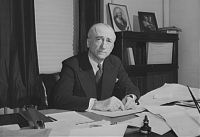
Portrait of James F. Byrnes James F. Byrnes Taylor v. Georgia — Opinion of the Court

The words 'without good and sufficient cause' plainly refer to the failure to perform the services or to return the money advanced. Since the subsequent breach of the contract by the defendant, however capricious or reprehensible, does not establish a fraudulent intent at the initial stage of the transaction, the content which has been assigned to the phrase 'without good and sufficient cause' by the Georgia courts is immaterial.
Source: Wikisource

Portrait of James F. Byrnes James F. Byrnes Taylor v. Georgia — Opinion of the Court

Hardie was the only witness for the State. He testified that the agreement had been made, that he had advanced the $19.50, that appellant had neither done the work nor returned the money, and that although appellant had said something about being sick, he had given no visible sign of it and had not been confined to bed. Under the statutes of Georgia [4] appellant could not testify under oath, but he was permitted to make an unsworn statement in which he generally denied that he and Hardie had made the agreement or that Hardie had paid him the $19.50.
Source: Wikisource

Portrait of James F. Byrnes James F. Byrnes Taylor v. Georgia — Opinion of the Court

Appellant was indicted in the Superior Court of Wilkinson County, Georgia, for violation of §§ 7408 and 7409, of Title 26 of the Georgia Code. Section 7408 provides:
'Any person who shall contract with another to perform for him services of any kind with intent to procure money, or other thing of value thereby, and not to perform the service contracted for, to the loss and damage of the hirer
Source: Wikisource

Get perspective with Kwize: daily news enlightened by great literature