Summary

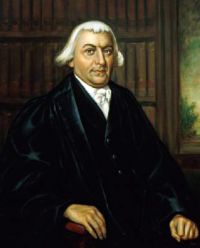
Portrait of James Iredell James Iredell Calder v. Bull — Concurring Opinion

It may, indeed, appear strange to some of us, that in any form, there should exist a power to grant, with respect to suits depending or adjudged, new rights of trial, new privileges of proceeding, not previously recognized and regulated by positive institutions; but such is the established usage of Connecticut, and it is obviously consistent with the general superintending authority of her Legislation. Nor is it altogether without some sanction for a Legislature to act as a court of justice.
Source: Wikisource

Portrait of James Iredell James Iredell Calder v. Bull — Concurring Opinion

If, then, a government, composed of Legislative, Executive and Judicial departments, were established, by a Constitution, which imposed no limits on the legislative power, the consequence would inevitably be, that whatever the legislative power chose to enact, would be lawfully enacted, and the judicial power could never interpose to pronounce it void. It is true, that some speculative jurists have held, that a legislative act against natural justice must, in itself, be void; but I cannot think that under such a government, any court of Justice would possess a power to declare it so.
Source: Wikisource

Get perspective with Kwize: daily news enlightened by great literature