Summary

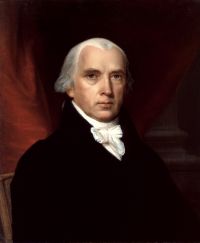
Portrait of James Madison James Madison A Candid State of Parties — Essays… (1792)

Men of those sentiments must naturally wish to point the measures of Government less to the interest of the many than of a few, and less to the reason of the many than to their weaknesses; hoping, perhaps, in proportion to the ardor of their zeal, that by giving such a turn to the administration, the Government itself may by degrees be narrowed into fewer hands, and approximated to an hereditary form.
Source: Wikisource

Portrait of James Madison James Madison A Candid State of Parties — Essays… (1792)

The Republican party, as it may be termed, conscious that the mass of the people in every part of the Union, in every State, and of every occupation, must at bottom be with them, both in interest and sentiment, will naturally find their account in burying all antecedent questions, in banishing every other distinction than that between enemies and friends to republican government, and in promoting a general harmony among the latter, wherever residing or however employed.
Source: Wikisource

Portrait of James Madison James Madison A Candid State of Parties — Essays… (1792)

On the republican side, again, the superiority of numbers is so great, their sentiments are so decided, and the practice of making a common cause, where there is a common sentiment and common interest, in spite of circumstantial and artificial distinctions, is so well understood, that no temperate observer of human affairs will be surprised if the issue in the present instance should be reversed, and the Government be administered in the spirit and form approved by the great body of the people.
Source: Wikisource

Get perspective with Kwize: daily news enlightened by great literature