Summary

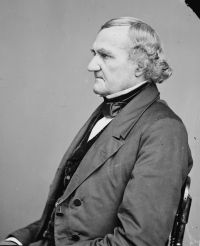
Portrait of John Catron John Catron Ledoux v. Black — Opinion of the Court

The only question presented for our consideration is, which party has the better right to the land in dispute? The defendant, Black, claims title under an entry made in 1808, and a patent founded on the entry, dated in 1810, in the name of General Lafayette, for a thousand acres. The validity of this title as against the United States is not denied; but the plaintiffs claim to have an elder title, by virtue of a concession to Ursino Bouligny, of forty arpens front by forty arpens in depth, dated January 10, 1796, of which the plaintiffs are assignees.
Source: Wikisource

Portrait of John Catron John Catron Ledoux v. Black — Opinion of the Court

Until the confirmation took place, (supposing the act of 1820 did confirm Bouligny's claim,) no valid title as against the United States was vested in the grantee to any specific tract of land. We need only to refer to the case of De Vilemont v. The United States, 13 How. 266, for authority to this effect. The cases are alike in all their features.
Nor did the mere act of confirmation tend to locate the claim, and sever the land from the public domain; this could only be done by a public survey, and which was not done till 1844.
Source: Wikisource

Get perspective with Kwize: daily news enlightened by great literature