Summary

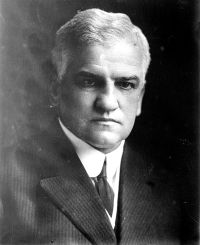
Portrait of John Hessin Clarke John Hessin Clarke Ash Sheep Company v. United States…

The argument of the Sheep Company is that the United States being owner of the fee of the land before the agreement, the effect of this grant and release of their possessory right by the Indians was to vest the complete and perfect title in the government, and thereby make the territory a part of the public lands with the interest of the Indians transferred to the proceeds to be derived from them.
Source: Wikisource

Portrait of John Hessin Clarke John Hessin Clarke Ash Sheep Company v. United States…

In 1871 suit was brought in the United States District Court for the District of Oregon, claiming that penalties under the section had been incurred by pasturing 'sheep,' as in this case, on Indian lands without the consent of the tribe. In a carefully prepared and clearly reasoned opinion Judge Deady overruled a demurrer to the complaint, and held that 'sheep' were clearly within the mischief to be remedied and fairly within the language of the act.
Source: Wikisource

Portrait of John Hessin Clarke John Hessin Clarke Ash Sheep Company v. United States…

Webster's New International Dictionary defines 'cattle' thus:
'Collectively, live animals held as property or raised for some use, now usually confined to quadrupeds of the bovine family, but sometimes including all domestic quadrupeds, as sheep, goats, horses, mules, asses, swine,' etc.
The Standard Dictionary defines the word as meaning:
'Domesticated bovine animals, as oxen, cows, bulls, and calves; also, though seldom now as compared with former times, any live stock, kept for use or profit, as horses, camels, sheep, goats, swine' etc.
Source: Wikisource

Get perspective with Kwize: daily news enlightened by great literature