Summary

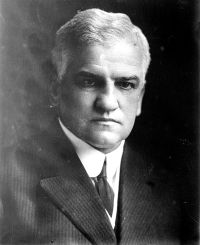
Portrait of John Hessin Clarke John Hessin Clarke Crescent Cotton Oil Company v. Mississippi…

It clearly appears that in practice it is an advantage to the purchaser of cotton seed to operate gins, not only for the profit that may be made from them directly, but because the grower of cotton often prefers to sell his seed to the company ginning it rather than carry it to another purchaser. It is also in evidence that individuals, as well as corporations owned and operated gins and that other oil companies than the plaintiff in error obtained their supplies of seed from growers, from gin owners, and from brokers.
Source: Wikisource

Portrait of John Hessin Clarke John Hessin Clarke Crescent Cotton Oil Company v. Mississippi…

The application of these conclusions of law to the manufacturing operations of the cotton gins, which we have seen precede, but are not a part of, interstate commerce, renders it quite impossible to consider them an instrumentality of such commerce, which is burdened by the Anti-Gin Act, and the first contention of the plaintiff in error must be denied.
There remains the second contention, that the Anti-Gin Act denies to plaintiff in error the equal protection of the laws, because it applies to corporations and not to individuals.
Source: Wikisource

Portrait of John Hessin Clarke John Hessin Clarke Crescent Cotton Oil Company v. Mississippi…

It is clearly settled that any classification adopted by a state in the exercise of this power which has a reasonable basis, and is therefore not arbitrary, will be sustained against an attack based upon the equal protection of the laws clause of the Fourteenth Amendment, and also that every state of facts sufficient to sustain such classification which can be reasonably conceived of as having existed when the law was enacted will be assumed.
Source: Wikisource

Get perspective with Kwize: daily news enlightened by great literature