Summary

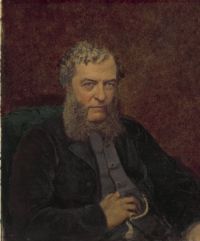
Portrait of John Lort Stokes John Lort Stokes Discoveries in Australia, Volume 2… (1846)

I cannot speak from experience of the winds or weather during the month of April, at Swan River, but have been told that the seabreezes are moderate, and the land winds of longer duration; calms are frequent—and the weather altogether seems to indicate the breaking up of the summer season; light winds are occasionally felt from the northward, with a dull, gloomy appearance between that point and S.W.
May is the month in which the winter weather fairly sets in, and it rarely happens that the middle of this month passes without the rains having commenced.
Source: Wikisource

Portrait of John Lort Stokes John Lort Stokes Discoveries in Australia, Volume 2… (1846)

As our barometer had been broken in March 1838, the register of a sympiesometer will be given in describing the gale of June in that year; but as this instrument had been found (by comparison with the barometer) to act exceedingly well, it will be sufficient for our purpose; the GENERAL use of a marine barometer being merely that of a weather glass, for which purpose a sympiesometer is equally good, and more sensitive.
Source: Wikisource

Portrait of John Lort Stokes John Lort Stokes Discoveries in Australia, Volume 2… (1846)

A rising of the water is likewise a certain prognostic of a northerly wind; and has been invariably noticed, at Swan River, to precede all gales from that quarter—this, of course, can only be observed while at anchor on the coast.
Another, and perhaps equally certain sign of approaching bad weather, during the winter season (and which is almost certain to be from the northward) is the strength of the N.E. winds—as it has been observed, that when the land winds blow strong, particularly from the N.E. and the seabreezes are light, with a falling barometer, a gale from the northward will follow.
Source: Wikisource

Get perspective with Kwize: daily news enlightened by great literature