Summary

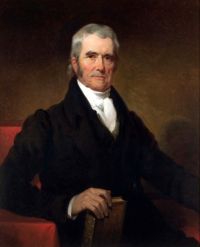
Portrait of John Marshall John Marshall Fowle v. Common Council of Alexandria…

Is a municipal corporation, established for the general purposes of government, with limited legislative powers, liable for losses consequent on its having misconstrued the extent of its powers, in granting a license which it had not authority to grant, without taking that security for the conduct of the person obtaining the license which its own ordinances had been supposed to require, and which might protect those who transacted business with the person acting under the license?
Source: Wikisource

Portrait of John Marshall John Marshall Fowle v. Common Council of Alexandria…

That corporations are bound by their contracts is admitted; that money corporations, or those carrying on business for themselves, are liable for torts, is well settled: but that a legislative corporation, established as a part of the government of the country is liable for losses sustained by a non-feasance, by an omission of the corporate body to observe a law of its own, in which no penalty is provided, is a principle for which we can find no precedent.
Source: Wikisource

Portrait of John Marshall John Marshall Fowle v. Common Council of Alexandria…

The common council has granted a license to carry on the trade of an auctioneer, which the law did not empower that body to grant. Is the town responsible for the losses sustained by individuals from the fraudulent conduct of the auctioneer? He is not the officer or agent of the corporation, but is understood to act for himself as entirely as a tavern keeper, or any other person who may carry on any business under a license from the corporate body.
Source: Wikisource

Get perspective with Kwize: daily news enlightened by great literature