Summary

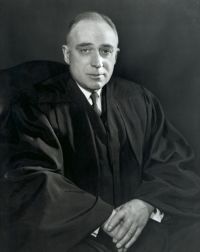
Portrait of John Marshall Harlan II John Marshall Harlan II Hamm v. City of Rock Hill, 379 U.S. 306 …

The Supremacy Clause cannot serve as a vehicle for extending the federal doctrine of abatement beyond proper bounds. That provision of the Constitution would come into play only if it appeared from the Civil Rights Act itself or from its legislative history and setting that Congress" purpose was to displace past as well as prospective applications of state laws touching upon the matters with which the federal statute is concerned.
Source: Wikisource

Portrait of John Marshall Harlan II John Marshall Harlan II Hamm v. City of Rock Hill, 379 U.S. 306 …

The Court holds that these state trespass convictions, occurring before the passage of the Civil Rights Act of 1964, must be set aside by virtue of the federal doctrine of criminal abatement. This remarkable conclusion finds no support in reason or authority.
The common-law rule of abatement is basically a canon of construction conceived by the courts as a yardstick for determining whether a legislature, which has enacted a statute making conduct noncriminal which was proscribed by an earlier criminal statute, also intended to put an end to nonfinal convictions under the former legislation.
Source: Wikisource

Get perspective with Kwize: daily news enlightened by great literature