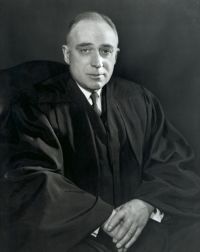
John Marshall Harlan II

John Marshall Harlan II

Summary

Portrait of John Marshall Harlan II John Marshall Harlan II Mapp v. Ohio — Dissenting Opinion

The specifics of trial procedure, which in every mature legal system will vary greatly in detail, are within the sole competence of the States. I do not see how it can be said that a trial becomes unfair simply because a State determines that evidence may be considered by the trier of fact, regardless of how it was obtained, if it is relevant to the one issue with which the trial is concerned, the guilt or innocence of the accused.
Source: Wikisource

Portrait of John Marshall Harlan II John Marshall Harlan II Mapp v. Ohio — Dissenting Opinion

Another, though equally solicitous of Constitutional rights, may choose to pursue one purpose at a time, allowing all evidence relevant to guilt to be brought into a criminal trial, and dealing with Constitutional infractions by other means. Still another may consider the exclusionary rule too rough-and-ready a remedy, in that it reaches only unconstitutional intrusions which eventuate in criminal prosecution of the victims. Further, a State after experimenting with the Weeks rule for a time may, because of unsatisfactory experience with it, decide to revert to a non-exclusionary rule.
Source: Wikisource

Portrait of John Marshall Harlan II John Marshall Harlan II Mapp v. Ohio — Dissenting Opinion

I do not believe that the Fourteenth Amendment empowers this Court to mould state remedies effectuating the right to freedom from "arbitrary intrusion by the police" to suit its own notions of how things should be done, as, for instance, the California Supreme Court did in People v. Cahan, 44 Cal.2d 434, 282 P.2d 905, with reference to procedures in the California courts, or as this Court did in Weeks for the lower federal courts.
A state conviction comes to us as the complete product of a sovereign judicial system.
Source: Wikisource

Get perspective with Kwize: daily news enlightened by great literature