Summary

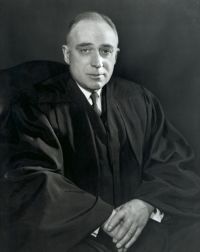
Portrait of John Marshall Harlan II John Marshall Harlan II Mrvica v. Esperdy — Opinion of the Court

No reason is suggested why the immigration authorities should have gone through a meaningless ritual of deportation for the purpose of not deporting the petitioner. The ameliorative clause on which the petitioner relies indicates, if anything, that the petitioner was not intended to be readmitted as a resident; his admission was conditioned on a finding that he was 'a bona fide seaman and entitled to shore leave' and was authorized only 'for such time as the alien may be admitted as a seaman.'
Once these arguments are laid to rest, the proper disposition of this case is clear and unavoidable.
Source: Wikisource

Portrait of John Marshall Harlan II John Marshall Harlan II Mrvica v. Esperdy — Opinion of the Court

The petitioner challenges none of the above. He pitches his argument on the statutory definition of 'residence' as 'the place of general abode; the place of general abode of a person means his principal, actual dwelling place in fact, without regard to intent.' Immigration and Nationality Act, § 101 (a) (33) , 66 Stat. 170, 8 U.S.C. § 1101 (a) (33) . The petitioner argues that the statute makes 'residence' a question of observable fact, and that, on this basis, his residence throughout the 1942 voyage must be taken as having remained in the United States.
Source: Wikisource

Portrait of John Marshall Harlan II John Marshall Harlan II Mrvica v. Esperdy — Opinion of the Court

By express legislative directive, the petitioner's departure in 1942 is for present purposes to be regarded as a deportation. We think it beyond dispute that one who has been deported does not continue to have his residence here, whatever may be the significance of other factors in the absence of a valid deportation.
Source: Wikisource

Get perspective with Kwize: daily news enlightened by great literature