Summary

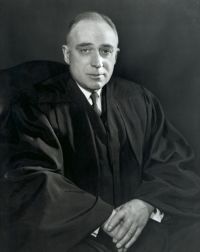
Portrait of John Marshall Harlan II John Marshall Harlan II Spinelli v. United States — Opinion of the Court

So much indeed the Government does not deny. Rather, following the reasoning of the Court of Appeals, the Government claims that the informant's tip gives a suspicious color to the FBI's reports detailing Spinelli's innocent-seeming conduct and that, conversely, the FBI's surveillance corroborates the informant's tip, thereby entitling it to more weight. It is true, of course, that the magistrate is obligated to render a judgment based upon a common-sense reading of the entire affidavit.
Source: Wikisource

Portrait of John Marshall Harlan II John Marshall Harlan II Spinelli v. United States — Opinion of the Court

There can be no question that the last item mentioned, detailing the informant's tip, has a fundamental place in this warrant application. Without it, probable cause could not be established. The first two items reflect only innocent-seeming activity and data. Spinelli's travels to and from the apartment building and his entry into a particular apartment on one occasion could hardly be taken as bespeaking gambling activity; and there is surely nothing unusual about an apartment containing two separate telephones. Many a householder indulges himself in this petty luxury.
Source: Wikisource

Portrait of John Marshall Harlan II John Marshall Harlan II Spinelli v. United States — Opinion of the Court

As used in this section 'unlawful activity' means (1) any business enterprise involving gambling * * * in violation of the laws of the State in which they are committed or of the United States * * *.'
In Aguilar, a search warrant had issued upon an affidavit of police officers who swore only that they had 'received reliable information from a credible person and do believe' that narcotics were being illegally stored on the described premises.
Source: Wikisource

Get perspective with Kwize: daily news enlightened by great literature