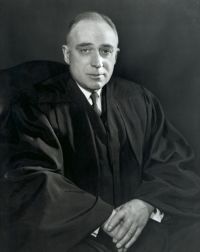
John Marshall Harlan II

John Marshall Harlan II

Summary

Portrait of John Marshall Harlan II John Marshall Harlan II Terry v. Ohio — Concurrence

In the first place, if the frisk is justified in order to protect the officer during an encounter with a citizen, the officer must first have constitutional grounds to insist on an encounter, to make a forcible stop. Any person, including a policeman, is at liberty to avoid a person he considers dangerous. If and when a policeman has a right instead to disarm such a person for his own protection, he must first have a right not to avoid him but to be in his presence.
Source: Wikisource

Portrait of John Marshall Harlan II John Marshall Harlan II Terry v. Ohio — Concurrence

Where such a stop is reasonable, however, the right to frisk must be immediate and automatic if the reason for the stop is, as here, an articulable suspicion of a crime of violence. Just as a full search incident to a lawful arrest requires no additional justification, a limited frisk incident to a lawful stop must often be rapid and routine. There is no reason why an officer, rightfully but forcibly confronting a person suspected of a serious crime, should have to ask one question and take the risk that the answer might be a bullet.
Source: Wikisource

Portrait of John Marshall Harlan II John Marshall Harlan II Terry v. Ohio — Concurrence

Officer McFadden's right to interrupt Terry's freedom of movement and invade his privacy arose only because circumstances warranted forcing an encounter with Terry in an effort to prevent or investigate a crime. Once that forced encounter was justified, however, the officer's right to take suitable measures for his own safely followed automatically.
Source: Wikisource

Get perspective with Kwize: daily news enlightened by great literature