Summary

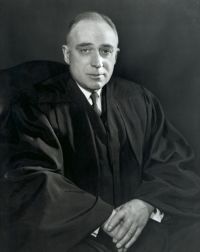
Portrait of John Marshall Harlan II John Marshall Harlan II United States v. Estate of Donnelly…

The impulse to make a new decisional rule nonretroactive rests, in civil cases at least, upon the same considerations that lie at the core of stare decisis, namely to avoid jolting the expectations of parties to a transaction. Yet once the decision to abandon precedent is made, I see no justification for applying principles determined to be wrong, be they constitutional or otherwise, to litigants who are in or may still come to court.
Source: Wikisource

Portrait of John Marshall Harlan II John Marshall Harlan II United States v. Estate of Donnelly…

There are, of course, circumstances when a change in the law will jeopardize an edifice which was reasonably constructed on the foundation of prevailing legal doctrine. Thus, it may be that the law of remedies would permit rescission, for example, but not an award of damages to a party who finds himself able to avoid a once-valid contract under new notions of public policy.
Source: Wikisource

Portrait of John Marshall Harlan II John Marshall Harlan II United States v. Estate of Donnelly…

More especially, I fear that certain distinctions suggested by the Court's opinion-e.g., between clear and ambiguous statutes, decisions construing statutes for the first time, decisions overruling prior constructions of statutes-may point in the direction of a retroactivity quagmire in civil litigation not unlike that in which the Court has become ensnared in the criminal field.
Source: Wikisource

Get perspective with Kwize: daily news enlightened by great literature