Summary

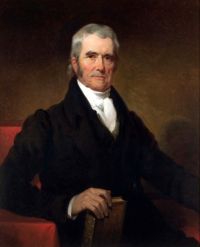
Portrait of John Marshall John Marshall Royal Naval Biography — Peyton… (1823)

In the course of that service Captain D’Urban fitted out a small vessel as a tender, armed her with the launch’s carronade, and placed her under the command of Lieutenant Peyton, who soon captured several of the enemy’s coasters. On one occasion, a French privateer of 6 long guns and 30 men, came out from Ancona, for the purpose of rescuing a prize he had just taken, but after an hour’s manoeuvring, and firing on both sides, she sheered off and returned into port, without having injured any of the tender’s crew, then consisting of only 8 men.
Source: Wikisource

Portrait of John Marshall John Marshall Royal Naval Biography — Peyton… (1823)

Previous to this capture, the Weazle had conveyed the Archduke Francis from Smyrna to Sardinia. H.R.H. was much pleased with the voyage, and particularly with the attentions of Captain Peyton, to whom he presented a gold snuffbox, having his initials on it, set with brilliants, as a token of his esteem. On their arrival at Cagliari, Captain Peyton was invited to dine with the King and Queen of Sardinia; and in return, he gave a ball on his own monarch’s birth-day to their majesties and the Austrian prince, on board the Weazle.
Source: Wikisource

Portrait of John Marshall John Marshall Royal Naval Biography — Peyton… (1823)

In that vessel, Captain Peyton accompanied the expedition to Walcheren, and was subsequently employed in the river Elbe, at Lisbon, and at Cadiz, during the siege of l’Isle de Leon. His next appointment was, about Feb. 1811, to the Weazle of 18 guns, stationed in the Archipelago, where he captured the French privateer le Roi de Rome, a fine vessel, only forty-five days off the stocks, mounting 10 guns, with a complement of 46 men, and commanded by a person styling himself a Chevalier de l’Ordre Royal des Deux Siciles.
Source: Wikisource

Get perspective with Kwize: daily news enlightened by great literature