Summary

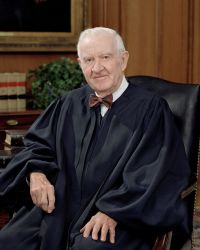
Portrait of John Paul Stevens John Paul Stevens City of Cleburne v. Cleburne Living Center… (1985)

In my own approach to these cases, I have always asked myself whether I could find a "rational basis" for the classification at issue. The term "rational," of course, includes a requirement that an impartial lawmaker could logically believe that the classification would serve a legitimate public purpose that transcends the harm to the members of the disadvantaged class. [4] Thus, the word "rational"--for me at least--includes elements of legitimacy and neutrality that must always characterize the performance of the sovereign's duty to govern impartially.
Source: Wikisource

Portrait of John Paul Stevens John Paul Stevens City of Cleburne v. Cleburne Living Center… (1985)

The rational-basis test, properly understood, adequately explains why a law that deprives a person of the right to vote because his skin has a different pigmentation than that of other voters violates the Equal Protection Clause. It would be utterly irrational to limit the franchise on the basis of height or weight; it is equally invalid to limit it on the basis of skin color.
Source: Wikisource

Portrait of John Paul Stevens John Paul Stevens City of Cleburne v. Cleburne Living Center… (1985)

The Court must be especially vigilant in evaluating the rationality of any classification involving a group that has been subjected to a "tradition of disfavor [for] a traditional classification is more likely to be used without pausing to consider its justification than is a newly created classification. Habit, rather than analysis, makes it seem acceptable and natural to distinguish between male and female, alien and citizen, legitimate and illegitimate
Source: Wikisource

Get perspective with Kwize: daily news enlightened by great literature