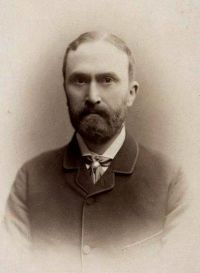
John Scott Keltie

John Scott Keltie

Summary

Portrait of John Scott Keltie John Scott Keltie 1911 Encyclopædia Britannica (1911)

The results of his labours were published in two large quarto volumes, entitled A Voyage to Terra Australis, with a folio volume of maps. The very day (July 19, 1814) on which his work was published Flinders died, at the early age of forty. The great work is a model of its kind, containing as it does not only a narrative of his own and of previous voyages, but masterly statements of the scientific results, especially with regard to magnetism, meteorology, hydrography and navigation.
Source: Wikisource

Portrait of John Scott Keltie John Scott Keltie 1911 Encyclopædia Britannica (1911)

Much suffering was endured by nearly all the members of the expedition: a considerable proportion of the men succumbed to disease, and their leader was so reduced by scurvy that his health was greatly impaired.
Flinders determined to proceed home in H.M.S. “Porpoise” as a passenger, submit the results of his work to the Admiralty, and obtain, if possible, another vessel to complete his exploration of the Australian coast. The “Porpoise” left Port Jackson on the 10th of August, accompanied by the H.E.I.C.’s ship “Bridgewater” (750 tons) and the “Cato” (450 tons) of London.
Source: Wikisource

Portrait of John Scott Keltie John Scott Keltie 1911 Encyclopædia Britannica (1911)

He is understood to have been the first to discover the source of such errors (which had scarcely been noticed before) , and after investigating the laws of the variations, he suggested counter-attractions, an invention for which Professor Barlow got much credit many years afterwards. Numerous experiments on ships’ magnetism were conducted at Portsmouth by Flinders, by order of the admiralty, in 1812. Besides the Voyage, Flinders wrote Observations on the Coast of Van Diemen’s Land, Bass’s Strait, &c., and two papers in the Phil.
Source: Wikisource

Get perspective with Kwize: daily news enlightened by great literature