Summary

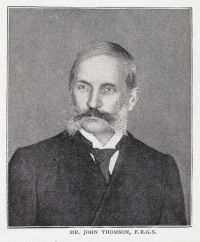
Portrait of John Thomson John Thomson Supplement to the Fourth, Fifth… (1824)

As an artist, Mr Allan possessed much facility of invention; with a keen discernment of those evanescent circumstances in the outward form, which mark the different shades of passion and affection in the mind. With the talent of artfully arranging the various parts of a crowded and bustling scene,—such as appears in some of his comic productions, he possessed that feeling for simplicity, which gives to his graver compositions, a classical and antique air of elegance.
Source: Wikisource

Portrait of John Thomson John Thomson Supplement to the Fourth, Fifth… (1824)

But, although, the public taste for the fine arts, which then existed in Scotland, was so feeble ag to leave his preceptor without that support which his liberal and spirited efforts justly claimed, Allan, on leaving the academy, had the good fortune to gain the patronage of individuals, whose generosity enabled him to prosecute his views, and to improve his taste, by studying the works of art abroad.
Source: Wikisource

Portrait of John Thomson John Thomson Supplement to the Fourth, Fifth… (1824)

Those, indeed, by which he is most known, are of a cast altogether different, being remarkable for the comic humour which they display. The Scotch wedding; the Highland dance; the Repentance-stool, with his Illustrations of the Gentle Shepherd, are all of this class, and so generally known, as to need no description. Four pictures representing the Carnival, are said to have been very successful. Of his graver compositions, the Prodigal Son, in possession of Lord Catheart, and his Hercules and Omphale, in the possession of Mr Erskine of Mar, are regarded as works of great merit.
Source: Wikisource

Get perspective with Kwize: daily news enlightened by great literature