Summary

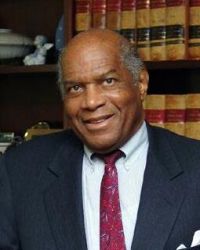
Portrait of Joseph Jerome Farris Joseph Jerome Farris Kahle v. Gonzales — Opinion of the Court

Plaintiffs also argue that they should be allowed to present evidence that the present copyright term violates the Copyright Clause’s “limited Times” [1] prescription as the Framers would have understood it. That claim was not directly at issue in Eldred, though Justice Breyer discussed it extensively in his dissent. See Eldred, 537 U.S. at 243. Plaintiffs assert all existing copyrights are effectively perpetual.
Source: Wikisource

Portrait of Joseph Jerome Farris Joseph Jerome Farris Kahle v. Gonzales — Opinion of the Court

In contrast to Plaintiffs, the Court has long defined “limited Times” by a balancing rather than an absolute test. See Eldred, 537 U.S. at 205-08; Sony Corp. of America v. Universal City Studios, Inc., 464 U.S. 417, 429 (1984) ; Twentieth Century Music Corp. v. Aiken, 422 U.S. 151, 156 (1975) (noting that the “limited copyright duration required by the Constitution” serves to encourage authors while eventually bringing their works within the public domain) .
Source: Wikisource

Portrait of Joseph Jerome Farris Joseph Jerome Farris Kahle v. Gonzales — Opinion of the Court

Each Plaintiff provides, or intends to provide, access to works that allegedly have little or no commercial value but remain under copyright protection. The difficulty and expense of obtaining permission to place those works on the Internet is overwhelming; ownership of these “orphan” works is often difficult, and sometimes impossible, to ascertain.
Prior to 1978, the number of orphaned works was limited by the renewal requirement. Renewal served as a filter that passed certain works — mostly those without commercial value — into the public domain.
Source: Wikisource

Get perspective with Kwize: daily news enlightened by great literature