Summary

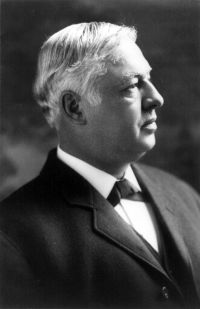
Portrait of Joseph Rucker Lamar Joseph Rucker Lamar Southern Railway Company v. Railroad Commission of Indiana…

Without, therefore, discussing the many cases sustaining the right of the states to legislate on subjects which, while not burdening, may yet incidentally affect interstate commerce, it is sufficient here to say that Congress has so far occupied the field of legislation relating to the equipment of freight cars with safety appliances as to supersede existing and prevent further legislation on that subject. The principle is too well established to require argument.
Source: Wikisource

Portrait of Joseph Rucker Lamar Joseph Rucker Lamar Southern Railway Company v. Railroad Commission of Indiana…

Until Congress entered that field, the states could legislate as to equipment in such manner as to incidentally affect, without burdening, interstate commerce. But Congress could pass the safety appliance act only because of the fact that the equipment of cars moving on interstate roads was a regulation of interstate commerce. Under the Constitution the nature of that power is such that, when exercised, it is exclusive, and ipso facto supersedes existing state legislation on the same subject. Congress, of course, could have 'circumscribed its regulations' so as to occupy a limited field.
Source: Wikisource

Portrait of Joseph Rucker Lamar Joseph Rucker Lamar Southern Railway Company v. Railroad Commission of Indiana…

The test, however, is not whether the state legislation is in conflict with the details of the Federal law or supplements it, but whether the state had any jurisdiction of a subject over which Congress had exerted its exclusive control. The safety appliance act having superseded the Indiana statute, the judgment imposing the penalty must be reversed, and the case remanded for further proceedings not inconsistent with this opinion.
Source: Wikisource

Get perspective with Kwize: daily news enlightened by great literature