Summary

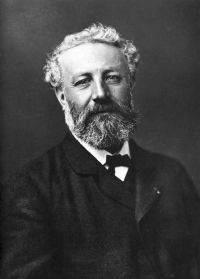
Portrait of Jules Verne Jules Verne 20,000 Leagues Under the Seas… (1870)

Assuredly, Captain Nemo hadn't seen fit to plant the idea of sharks in the minds of my companions. For my part, I stared at them with anxious eyes, as if they were already missing a limb or two. Should I alert them? Yes, surely, but I hardly knew how to go about it.
"Would master," Conseil said to me, "give us some background on pearl fishing?"
"On the fishing itself?" I asked. "Or on the occupational hazards that—"
"On the fishing," the Canadian replied. "Before we tackle the terrain, it helps to be familiar with it."
Source: Wikisource

Portrait of Jules Verne Jules Verne 20,000 Leagues Under the Seas… (1870)

Ned and Conseil took seats on a couch, and right off the Canadian said to me:
"Sir, just what is a pearl exactly?"
"My gallant Ned," I replied, "for poets a pearl is a tear from the sea; for Orientals it's a drop of solidified dew; for the ladies it's a jewel they can wear on their fingers, necks, and ears that's oblong in shape, glassy in luster, and formed from mother–of–pearl; for chemists it's a mixture of calcium phosphate and calcium carbonate with a little gelatin protein
Source: Wikisource

Portrait of Jules Verne Jules Verne 20,000 Leagues Under the Seas… (1870)

Captain Nemo then told me, "there are pearl fisheries in the Bay of Bengal, the seas of the East Indies, the seas of China and Japan, plus those seas south of the United States, the Gulf of Panama and the Gulf of California; but it's off Ceylon that such fishing reaps its richest rewards. No doubt we'll be arriving a little early. Fishermen gather in the Gulf of Mannar only during the month of March, and for thirty days some 300 boats concentrate on the lucrative harvest of these treasures from the sea. Each boat is manned by ten oarsmen and ten fishermen.
Source: Wikisource

Get perspective with Kwize: daily news enlightened by great literature