Summary

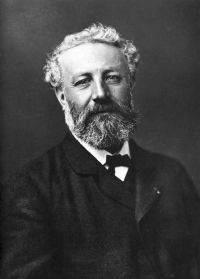
Portrait of Jules Verne Jules Verne Mathias Sandorf — Part II, Chapters IX-X (1885)

Toronthal Sava had quite a different feeling. The banker's wife submitted to her husband's control, although he showed her but little deference, but she was kind and good and worth a thousand times more in the honesty of her life and the care of her personal dignity. She was very fond of Sava. Beneath the young girl's shyness she had discovered her real worth, but the affection she felt for her was rather artificial and modified by a kind of admiration, of respect, and even of fear.
Source: Wikisource

Portrait of Jules Verne Jules Verne Mathias Sandorf — Part II, Chapters IX-X (1885)

What would Pierre say when he had become Sava Toronthal's husband? What could Mme. Bathory do? Assuredly it would be a horrible situation, the victim's son married to the murderer's daughter, but it would be horrible for them, not for him, Silas Toronthal!
Yes, but there was Sarcany, of whom there was no news, but whose return was always possible—a return that might lead to further engagements between the accomplices. He was not the man to forget if fortune turned against him.
Source: Wikisource

Portrait of Jules Verne Jules Verne Mathias Sandorf — Part II, Chapters IX-X (1885)

Sarcany did not care to remain with Toronthal, and the banker had no wish to continue his business relations with him. And so Sarcany left Trieste with Zirone, who, not having left him in adversity, was not the man to leave him in prosperity. Both disappeared, and the banker heard nothing about them for some time. Where had they gone? Probably to some large European city, where people did not bother themselves about a man's origin providing he was rich, and cared nothing how a man had gained his wealth, providing he spent it among them.
Source: Wikisource

Get perspective with Kwize: daily news enlightened by great literature