Summary

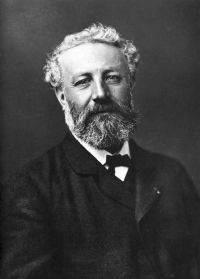
Portrait of Jules Verne Jules Verne The Survivors of the Chancellor… (1875)

A horrible presentiment carried me to the foot of the mast, and, just as I had guessed, Hobart had hanged himself. I could not for a moment doubt that it was I myself that had impelled him to the suicide. A cry of horror had scarcely escaped my lips, when my fellow-passengers were at my side, and the rope was cut. Then came the sailors. And what was it that made the group gather so eagerly around the body? Was it a humane desire to see whether any sparks of life remained? No, indeed; the corpse was cold, and the limbs were rigid; there was no chance that animation should be restored.
Source: Wikisource

Portrait of Jules Verne Jules Verne The Survivors of the Chancellor… (1875)

But, in truth, I had the greatest difficulty in the world in preventing Andre from rushing out upon the cannibals, and snatching the odious food from their clutches. I represented to him the hopelessness of his attempt, and tried to reconcile him by telling him that if they liked the food they had a right to it. Hobart had not been murdered; he had died by his own hand; and, after all, as the boatswain had once remarked to me, "It was better to eat a dead man than a live one."
Source: Wikisource

Portrait of Jules Verne Jules Verne The Survivors of the Chancellor… (1875)

Neither would Miss Herbey, Andre, nor his father, consent to alleviate their pangs of hunger by such revolting means. I know nothing for certain as to what Curtis did, and I did not venture to inquire; but of the others, -- Falsten, Dowlas, the boatswain, and all the rest, -- I know that, to assuage their cravings, they consented to reduce themselves to the level of beasts of prey; they were transformed from human beings into ravenous brutes.
Source: Wikisource

Get perspective with Kwize: daily news enlightened by great literature