Summary

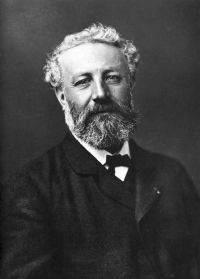
Portrait of Jules Verne Jules Verne The Survivors of the Chancellor… (1875)

The breeze freshened, and the masts gave to the pressure of the sails, but round and round we went, keeping time in regular monotony to the sing-song tune hummed by one of the sailors.
We had gained about twenty feet, and were redoubling our efforts when the ship grounded again.
And now no effort would avail; all was in vain; the tide began to turn: and the Chancellor would not advance an inch. Was there time to go back? She would inevitably go to pieces if left balanced upon the ridge. In an instant the captain has ordered the sails to be furled, and the anchor dropped from the stern.
Source: Wikisource

Portrait of Jules Verne Jules Verne The Survivors of the Chancellor… (1875)

High tide would be at twenty minutes past four, and at ten minutes before that time the ship had been hauled as far as her sea-range would allow; her keel grazed the ridge, and her progress was arrested. When the lowest part of her stern, however, just cleared the obstruction, Curtis deemed that there was no longer any reason why the mechanical action of the wind should not be brought to bear and contribute its assistance. Without delay, all sails were unfurled and trimmed to the wind.
Source: Wikisource

Portrait of Jules Verne Jules Verne The Survivors of the Chancellor… (1875)

Curtis lost no time in assembling passengers and crew, and announcing to them the facts of the case.
"My friends," he said, "I am here to tell you that the Chancellor has sustained far greater injuries than we suspected, and that her hull is very seriously damaged. If we had been stranded anywhere else than on a barren reef, that may at any time be overwhelmed by a tempestuous sea, I should not have hesitated to take the ship to pieces, and construct a smaller vessel that might have carried us safely to land
Source: Wikisource

Get perspective with Kwize: daily news enlightened by great literature