Summary

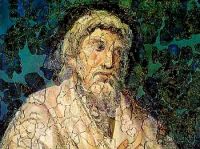
Portrait of Lactantius Lactantius Ante-Nicene Fathers Vol. VII, The Divine Institutes… (1885)

But because the subject has been much agitated among philosophers, and they who take away providence appear to have been sufficiently answered by men of sagacity and eloquence, and because it is necessary to speak, in different places throughout this work which we have undertaken, respecting the skill of the divine providence, let us for the present omit this inquiry, which is so closely connected with the other questions, that it seems possible for us to discuss no subject, without at the same time discussing the subject of providence.
Source: Wikisource

Portrait of Lactantius Lactantius Ante-Nicene Fathers Vol. VII, The Divine Institutes… (1885)

For there is no one so uncivilized, and of such an uncultivated disposition, who, when he raises his eyes to heaven, although he knows not by the providence of what God all this visible universe is governed, does not understand from the very magnitude of the objects, from their motion, arrangement, constancy, usefulness, beauty, and temperament, that there is some providence, and that that which exists with wonderful method must have been prepared by some greater intelligence.
Source: Wikisource

Portrait of Lactantius Lactantius Ante-Nicene Fathers Vol. VII, The Divine Institutes… (1885)

These, however, were most vigorously opposed by the other philosophers, and especially by the Stoics, who taught that the universe could neither have been made without divine intelligence, nor continue to exist unless it were governed by the highest intelligence. But even Marcus Tullius, although he was a defender of the Academic system, discussed at length and on many occasions respecting the providence which governs affairs, confirming the arguments of the Stoics, and himself adducing many new ones
Source: Wikisource

Get perspective with Kwize: daily news enlightened by great literature