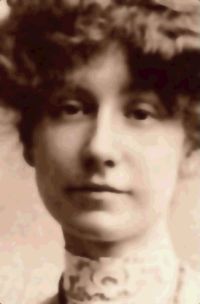
Marjorie Bowen

Marjorie Bowen

Summary

Portrait of Marjorie Bowen Marjorie Bowen The Soul of Jeannie Duncan (1915)

He had ceased to love Francis, he had ceased to hope for Jeannie. He had always known that Frank was base, and yet the knowledge of this marriage seemed to have revealed this baseness for the first time, as it had revealed the goodness, the almost foolish nobility of Jeannie.
His thoughts turned to the other woman. He was surprised at her intuition; she had always seemed insignificent, even stupid. But the little people were always sharp to discern the low side of others. Jeannie had been blinded by her own loftiness.
Source: Wikisource

Portrait of Marjorie Bowen Marjorie Bowen The Soul of Jeannie Duncan (1915)

He was lashed by her injustice.
"Yes, you should have known that he—Frank—was incapable of any baseness. How was it you did not know him better?"
"You never doubted, then?"
"Never. Can you tell me the same?"
"No, Jeannie."
"Then I will prove you are wrong."
There was an extraordinary look in her eyes.
"Prove?"
"Yes."
He was helpless in his bewilderment. "You cannot prove the truth to be false," he said amazedly.
"You do not know the truth."
"Poor Jeannie!" he cried desperately.
"Nay, listen. Will you hear the truth? I was the traitor!"
Source: Wikisource

Portrait of Marjorie Bowen Marjorie Bowen The Soul of Jeannie Duncan (1915)

She was a woman of a firm decision—she would never have married save for love.
Mr. Hepburn reflected, with something of a start, that she might very well be married now, however.
Sitting over his dinner in the tavern in Rosamund's Wynd, he pictured Jeannie Duncan. Other faces had pleased an idle fancy, other smiles had eased a lonely heart, other companionship had lightened the empty hours of exile, but he had never asked, never wished, another woman to be his wife.
Source: Wikisource

Get perspective with Kwize: daily news enlightened by great literature