Summary

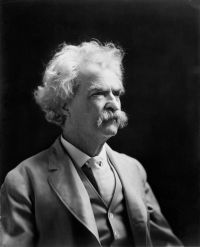
Portrait of Mark Twain Mark Twain,  Roughing It — Chapter LXII (1872)

“ Indeed, the enemy could not keep from betraying some little spark of indignation at his manufactured history—and when it came to indignation, that was the Admiral's very "best hold." He was always ready for a political argument, and if nobody started one he would do it himself. With his third retort his temper would begin to rise, and within five minutes he would be blowing a gale, and within fifteen his smoking-room audience would be utterly stormed away and the old man left solitary and alone, banging the table with his fist, kicking the chairs, and roaring a hurricane of profanity. ”
Source: Wikisource

Portrait of Mark Twain Mark Twain,  Roughing It — Chapter LXII (1872)

“ But Admiral, why overlook the Willis and Morgan case in South Carolina? You are too well informed a man not to know all about that circumstance. Your arguments and your conversations have shown you to be intimately conversant with every detail of this national quarrel. You develop matters of history every day that show plainly that you are no smatterer in it, content to nibble about the surface, but a man who has searched the depths and possessed yourself of everything that has a bearing upon the great question. ”
Source: Wikisource

Portrait of Mark Twain Mark Twain,  Roughing It — Chapter LXII (1872)

“ Who, indeed, were the two Massachusetts ministers? and who were the two Southern women they burned? I do not need to remind you, Admiral, with your intimate knowledge of history, that Waite was the nephew of the woman burned in Charleston; that Granger was her cousin in the second degree, and that the woman they burned in Boston was the wife of John H. Morgan, and the still loved but divorced wife of Winthrop L. Willis. Now, Admiral, it is only fair that you should acknowledge that the first provocation came from the Southern preachers and that the Northern ones were justified in retaliating. ”
Source: Wikisource

Get perspective with Kwize: daily news enlightened by great literature