Summary

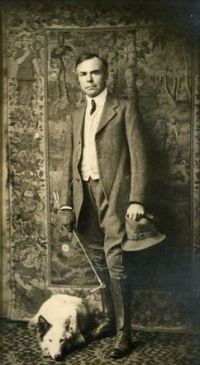
Portrait of Melville Davisson Post Melville Davisson Post Walker of the Secret Service — XI. The Girl in the Picture (1924)

XI. The Girl in the Picture I advanced to meet the man with a sense of victory. The United States Secret Service had searched the world for him. He had been long concealed. But my sense of victory vanished when I saw him.
He sat in a great chair on the long terrace that overlooked the sweep of lawn and the dark, rapid river. He had been, all the time, under our very noses. We had thought of every other place except an English country house within a jump of London. And he had been sitting here in every comfort that money could assemble.
Source: Wikisource

Portrait of Melville Davisson Post Melville Davisson Post Walker of the Secret Service — XI. The Girl in the Picture (1924)

When she went up to that conference in Montreal, He had young Hurlingham on the spot—fine, straight, clean youngster as ever was born. It was love her at sight; an’ now”—he made a great gesture as though to include something without a visible limit—“she’s got all these places in England, an’ all that Standard Oil money that belonged to his mother’s people.”
The girl, radiant as a vision, was advancing on the carpet of golden beech leaves, and I hastened to put a final query, the thing I had come here to find out. I had given up the idea of an arrest. The man was dying.
Source: Wikisource

Portrait of Melville Davisson Post Melville Davisson Post Walker of the Secret Service — XI. The Girl in the Picture (1924)

I took the chair beyond him.
He shot his head forward suddenly, in a tense gesture.
“She’s a heavenly angel!” he said. “I don’t know what God Almighty meant by setting her in the game with the bunch of crooks that He’s got running the world—unless He counted on me.” The laugh became a sort of chuckle in his big throat—“Ain’t she a heavenly angel?”
He whipped a worn photograph out of his pocket and reached it across the table to me.
It was the photograph of a girl with a narrow slit cut out across the face. It had been taken from a painting; one could tell from the flat surface.
Source: Wikisource

Get perspective with Kwize: daily news enlightened by great literature