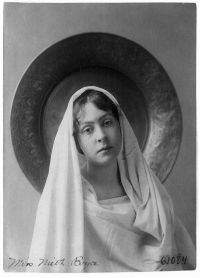
Neith Boyce

Neith Boyce

Summary

Portrait of Neith Boyce Neith Boyce Love in a Dutch Garden (1914)

A road runs by the garden-gate, and all the naughty world may travel by that road—and does. A band of wandering Mummers, from the village fair, passes by. The locked gate and shut windows of the house cannot keep them out. A shower of confetti invades the garden—and in through the hedge careless, wanton Pierrot creeps, and finds Prunella.
Pierrot is Lovelace—but to Prunella he is Love, the World, Life—everything that has been forbidden her, everything she is longing for.
Source: Wikisource

Portrait of Neith Boyce Neith Boyce Love in a Dutch Garden (1914)

A ladder is put up to her window at night, and she comes down into his arms. And now Love, the statue, wakes and plays upon his viol. He is in league with Nature, the World, the Birds, the Mummers and Pierrot, to seduce Prunella out of the garden. . . .
And yet he is a moral Love, as the sequel shows. . . .
“Prunella” speaks to the eye. The garden, scene of all three acts, is a pretty place. The sky is sometimes lit by the moon, sometimes spangled with stars, sometimes both together. We see and hear a great deal throughout the play of the moon, the stars, of birds, and—naturally—of Love.
Source: Wikisource

Portrait of Neith Boyce Neith Boyce Love in a Dutch Garden (1914)

To be sure, Pierrot deserts Prunella afterward, marriage not being one of his habits, but that can he remedied—and is.
Act III shows the garden three years after Prunella's flight—a sad, deserted garden, gone to weed and seed. The gate, half off its hinge, stands open. The three gardeners are gone. and two of the aunts. Only Aunt Privacy, softest-hearted of the three, remains, mourning in a very pretty dress of gray and white and black. A stranger has taken the little house, and she waits to give him the key.
Source: Wikisource

Get perspective with Kwize: daily news enlightened by great literature