Summary

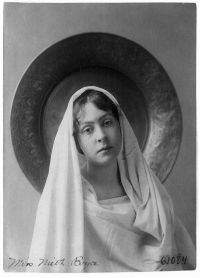
Portrait of Neith Boyce Neith Boyce The Folly of Others — A Provident Woman… (1904)

Tom's head sank. He put his arms about Cecilia and buried his face on her shoulder, and she held him, smoothing his hair gently, as though he were a child.
"It's no use, Tom. If I marry, I must marry someone that can take my place, as far as my family goes, and more. They can't take care of themselves. Mother hasn't an idea about business or getting along, and she can't manage the girls. You see what Bertha is—so pretty, and just as wild as a colt. I can't have her growing up so. You know we've never had a real home. My father—well, he was the sort of a man that never ought to marry.
Source: Wikisource

Portrait of Neith Boyce Neith Boyce The Folly of Others — A Provident Woman… (1904)

III. "If you're not going to the social, we shall be able to get in another bicycle lesson," suggested Mr. Jackson, who when he had been another month in the house would in the natural order of things be called Tom by everybody. He was a young fellow of twenty-three, lightly made, with a delicate face, a dark dust on his upper lip, and remarkably beautiful, large gray eyes, so dark that they passed for black. Cecilia looked into these eyes and shook her head.
Source: Wikisource

Portrait of Neith Boyce Neith Boyce The Folly of Others — A Provident Woman… (1904)

With them it's a question of bread and butter and clothes, but with me—it's almost life or death!"
"No, it isn't, Tom. I don't believe that. Bread and butter and clothes are more important than you seem to think, and—sentiment—isn't as important as you think. I want to live decently, and without this horrible load of debt that we're just getting out of, and to know that the rent is going to be paid, and that Bertha isn't running the streets with a lot of common boys and girls. That's what I care about."
Cecilia put him gently away from her and rose.
Source: Wikisource

Get perspective with Kwize: daily news enlightened by great literature