Summary

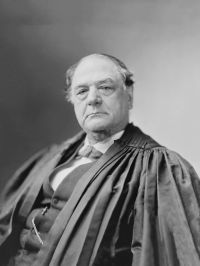
Portrait of Noah Haynes Swayne Noah Haynes Swayne Bank v. Sherman Hickling — Opinion of the Court

It is our business to execute the law as we find it, and not to make or modify it. In the disposition of property among creditors, equality is equity. It was the genius and purpose of the statute to secure this result as far as possible from the moment its aid was invoked, whether by debtor or creditor. The power of amendment is incident to all judicial administration.
Source: Wikisource

Portrait of Noah Haynes Swayne Noah Haynes Swayne Bank v. Sherman Hickling — Opinion of the Court

They insist that as the act of bankruptcy upon which the adjudication was founded was intro uced into the petition by an amendment made on the 22d of April following, the title of the assignee cannot be held to have vested at an earlier time, and that Allen, therefore, had the title when he made the transfer.
The court below held according to the theory of the bill.
The statute is clear and imperative. Its constitutional validity is not questioned. It contains no qualification. We cannot interpolate what is claimed. Such a function is beyond the sphere of our power and duty.
Source: Wikisource

Portrait of Noah Haynes Swayne Noah Haynes Swayne Bank v. Sherman Hickling — Opinion of the Court

Its exercise is vital to the ends of justice. Tilton v. Cofield, 93 U.S. 163. The filing of the petition was a caveat to all the world. It was in effect an attachment and injunction. Thereafter all the property rights of the debtor were ipso facto in abeyance until the final adjudication. If that were in his favor they revived and were again in full force. If it were against him, they were extinguished as to him and vested in the assignee for the purposes of the trust with which he was charged. The bankrupt became, as it were, for many purposes, civiliter mortuus.
Source: Wikisource

Get perspective with Kwize: daily news enlightened by great literature