Summary

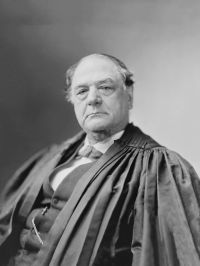
Portrait of Noah Haynes Swayne Noah Haynes Swayne National Bank v. Matthews — Opinion of the Court

The intent, not the letter, of the statute constitutes the law. A court of equity is always reluctant in the last degree to make a decree which will effect a forfeiture. The bank parted with its money in good faith. Its garments are unspotted. Under these circumstances, the defence of ultra vires, if it can be made, does not address itself favorably to the mind of the Chancellor. We find nothing in the record touching the deed of trust which, in our judgment, brings it within the letter or the meaning of the prohibitions relied upon by the counsel for the defendant in error.
Source: Wikisource

Portrait of Noah Haynes Swayne Noah Haynes Swayne National Bank v. Matthews — Opinion of the Court

A loan was made and a note taken, secured by a pledge of worthless bank-stock. The borrower sought to enjoin the collection of the note upon the ground that the transaction was forbidden by the charter, and therefore void. The court held the borrower bound, and upon a counter-claim adjudged that he should pay the amount of the loan with interest. Mott v. The United States Trust Co., 19 Barb. (N. Y.) 568.
Where a corporation is incompetent by its charter to take a title to real estate, a conveyance to it is not void, but only voidable, and the sovereign alone can object.
Source: Wikisource

Get perspective with Kwize: daily news enlightened by great literature