Summary

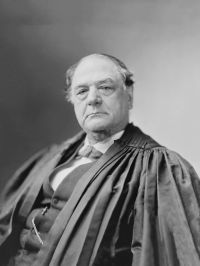
Portrait of Noah Haynes Swayne Noah Haynes Swayne Smith v. McCool — Opinion of the Court

It would, doubtless, have tended to defeat rather than promote the ends of justice. The ruling of the court which required the plaintiff to prove the heirship aliunde subjected him to no hardship. If the fact were as found by the special verdict there could be no difficulty in his proving it, as it was proved before. If the fact were otherwise, to admit the estoppel would have involved the sacrifice of truth and justice to a technicality, and have subjected the defendant to a grievous loss, which he ought not to be required to bear.
Source: Wikisource

Portrait of Noah Haynes Swayne Noah Haynes Swayne Smith v. McCool — Opinion of the Court

The party demurring relies upon the law arising upon the facts thus presented. The facts so spread on the record are never evidence for or against either party in another suit. Here the special verdict performed the same office as such a demurrer.
The defendant's counsel insisted upon the legal proposition ultimately sustained by this court-that, conceding the facts to be as found, the plaintiff was not entitled to recover in that action.
Source: Wikisource

Portrait of Noah Haynes Swayne Noah Haynes Swayne Smith v. McCool — Opinion of the Court

The plaintiff excepted and has brought this ruling here for review.
A verdict without a judgment in a case like this is of no validity, either as an estoppel or as evidence. [1] To give efficacy to a verdict, general or special, it must be followed by a judgment, and when offered to establish any fact, such fact must have constituted, in whole or in part, the foundation of the judgment which was rendered. Greenleaf says: [2] 'It is only where the point in issue has been determined that the judgment is a bar.
Source: Wikisource

Get perspective with Kwize: daily news enlightened by great literature