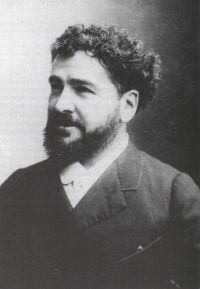
 Octave Uzanne,
Mauprat — The Portraits of George Sand
(1904)
Octave Uzanne,
Mauprat — The Portraits of George Sand
(1904)
“ Portraits are often unfaithful, but her features were probably always rather too virile, and her eyes too large, recalling the epithet given by the ancients to Minerva. She seems, in short, to have been entirely without those qualities which give so much charm to feminine beauty—softness, weakness, morbidezza, as the Italians say. She is the personification of the blue-stocking of genius, the androgynous and Romantic ideal, the woman strong in her fine moral harmony—tender, disinterested, and courageous. Her supreme kindliness breathes from all her portraits. ”
