Summary

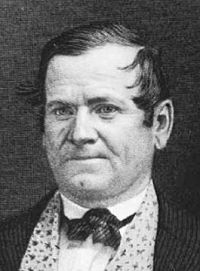
Portrait of Orson Hyde Orson Hyde Journal of Discourses — Volume 7…

At the same time I say, Let me take that as an admonition to regulate my own conduct, and see that I do not go astray, that I may not be swamped in the spirit of evil—in the spirit and pride of this world. Let me take care of number one, and keep him clear of all iniquity, free from a spirit of murmuring or fault-finding.
Some suppose that because men in higher authority than themselves do so-and-so, they can do so-and-so with less impunity. It is immaterial to us what So-and-so does; it gives no license to us to do wrong
Source: Wikisource

Portrait of Orson Hyde Orson Hyde Journal of Discourses — Volume 7…

For instance, when we leave our homes on earth for a long time, and roam abroad in foreign lands, we forget many of the little incidents of our nativity, barely recollecting and being impressed that we have a home in some far-off country, while in others the thought is entirely obliterated from their memory, and is to them as though such things had never existed. But our forgetfulness cannot alter the facts.
Did we covenant to be subject to the authority of God in all the different relations of life—that we would be loyal to the legitimate powers that emanate from God?
Source: Wikisource

Portrait of Orson Hyde Orson Hyde Journal of Discourses — Volume 7…

But "the spirit of the prophets is subject to the prophets, and wisdom is justified of her children."
The counsel we received this morning commends itself to every man's conscience. The good which we feel, and with which we are often exercised, may be freely dispensed to others; but the bad feelings which we sometimes possess should not often be suffered to burden others, but should be buried—smothered, until they die out.
Source: Wikisource

Get perspective with Kwize: daily news enlightened by great literature