Summary

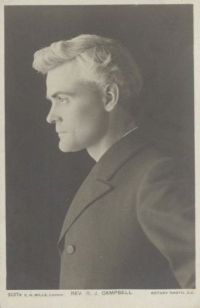
Portrait of R. J. Campbell R. J. Campbell The Making of an Apostle

Gautama placed the ideal in ceasing to live; Christ, on the other hand, taught His followers to live more deeply, truly and grandly than before. To follow Jesus, now as always, means to feel more and not less, to add to the sum of our interests, and not to take from them, to raise the standard of our hopes, not to depress it. Like Gautama, He calls for a renunciation, but that renunciation is the gateway into larger life. The solemn gladness of Christian experience finds its parallel in no other teaching that the world has ever received.
Source: Gutenberg

Portrait of R. J. Campbell R. J. Campbell The Making of an Apostle

How can we be surprised that ascetics and hedonists within the bosom of the Christian Church itself have so frequently and lamentably mistaken the spirit of their Master's teaching? The ideal of Thomas à Kempis, in spite of its beauty, is no more that of Jesus than was the ideal of Gautama. How slowly men come to learn that peace and tribulation, joy and suffering, gladness and the Cross, are not incompatible, but the very conditions of each other!
Source: Gutenberg

Portrait of R. J. Campbell R. J. Campbell The Making of an Apostle

The loving thoughtfulness of Jesus bade Him seek out His humiliated and sorrow-stricken follower that He might assure him of forgiveness and restoration. Very intense and holy must their intercourse have been. From this moment Peter became a great and noble character; his discipline has not been for nothing, his self-seeking is at an end; ambition has no place in his mind for the future; arrogance and self-confidence thenceforth must have given place to a lowliness born of the remembrance of his cowardice and wretched failure.
Source: Gutenberg

Get perspective with Kwize: daily news enlightened by great literature