Summary

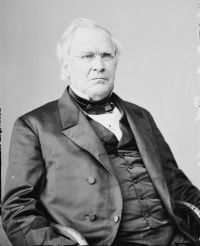
Portrait of Robert Cooper Grier Robert Cooper Grier Lessee of Doolittle v. Bryan — Opinion of the Court

Again, an officer, going out of office, may have an execution in his hands which has created a lien; if the act were construed so as imperatively to require a new or 'like process' to issue to the new officer, the lien, and with it the debt, might be lost. In other cases, on the contrary, a marshal may be, and often is, removed from office, because money, which once gets into his hands, cannot be got out again, and a plaintiff may much prefer to relinquish his execution and take a new one.
Source: Wikisource

Portrait of Robert Cooper Grier Robert Cooper Grier Lessee of Doolittle v. Bryan — Opinion of the Court

The third section of the act of 1800 enacts: 'That whenever a marshal shall sell any lands, tenements, or hereditaments, by virtue of process from a court of the United States, and shall die or be removed from office, or the term of his commission expire, before a deed shall be executed for the same by him to the purchaser; in every such case the purchaser or plaintiff, at whose suit the sale was made, may apply to the court from which the process issued, and set forth the case, assigning the reason why the title was not perfected by the marshal who sold the same
Source: Wikisource

Get perspective with Kwize: daily news enlightened by great literature