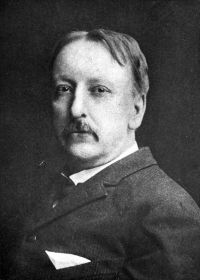
Rossiter Johnson

Rossiter Johnson

Summary

Portrait of Rossiter Johnson Rossiter Johnson The American Cyclopædia (1879)

The lake dwellings of extinct peoples represent all stages of civilization from the age of stone to the dawn of the iron age. Those of Lake Moosseedorf, Switzerland, are supposed to be the oldest, and those of Ireland the most recent.—In 1829 an excavation on the shore of Lake Zürich at Obermeilen revealed the existence of ancient piles and other antiquities, but no extended examination was made.
Source: Wikisource

Portrait of Rossiter Johnson Rossiter Johnson The American Cyclopædia (1879)

Ferdinard Keller followed up this discovery, and similar remains of prehistoric villages were found in Lakes Zürich, Constance, Geneva, Bienne, Neufchâtel, Morat, and several of the smaller lakes of Switzerland. From 20 to 50 settlements have been explored in each of the larger lakes; and immense numbers of implements of horn, bone, stone, bronze, and pottery have been found, with a few of gold, wood, and iron, mingled with bones of animals, and in a very few cases human remains. The most perfect example of a lake dwelling of the stone age was in the little lake of Moosseedorf, near Bern.
Source: Wikisource

Portrait of Rossiter Johnson Rossiter Johnson The American Cyclopædia (1879)

The piles of the two lower systems are round stems of soft wood, those of the uppermost split trunks of oak. Here were found mealing stones, hearth stones, wheat and barley, 8 lbs. of bread, burnt apples and pears, beech nuts, acorns, cherry stones, flax, cords, nets, mats, and woven cloth of bast and of flax, an abundance of broken pottery, many flint weapons, tools of horn and bone, several implements of maple wood, two or three long bows such as are still used by the South sea islanders, and a canoe 12 ft.
Source: Wikisource

Get perspective with Kwize: daily news enlightened by great literature