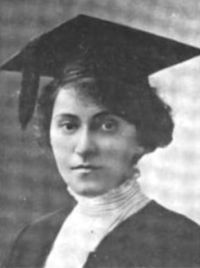
Ruth Edna Kelley

Ruth Edna Kelley

Summary

Portrait of Ruth Edna Kelley Ruth Edna Kelley The Book of Hallowe'en — XI. (1919)

Night of the Dead.
The tears of their deserted friends disturb the comfort of the
dead, and sometimes they appear to tell those in sorrow that their
shrouds are always wet from the tears shed on their graves.
Wakened by the dirge of the death-singers the people rise and pray
for the souls of the departed.
Source: Wikisource

Portrait of Ruth Edna Kelley Ruth Edna Kelley The Book of Hallowe'en — XI. (1919)

What fairies, dwarfs, pixies, and the like are to the Celts of
other places, the spirits of the dead are to the Celts of Brittany.
They possess the earth on Christmas, St. John's Day, and All
Saints'. In Finistere, that western point of France, there is a
saying that on the Eve of All Souls' "there are more dead in every
house than sands on the shore." The dead have the power to charm
mortals and take them away, and to foretell the future.
Source: Wikisource

Portrait of Ruth Edna Kelley Ruth Edna Kelley The Book of Hallowe'en — XI. (1919)

The record was carefully remembered, so that not
one should seem to be forgotten.
"We live with our dead," say the Bretons. First on the Eve of All
Souls' comes the religious service, "black vespers." The
blessedness of death is praised, the sorrows and shortness of life
dwelt upon. After a common prayer all go out to the cemetery to
pray separately, each by the graves of his kin, or to the "place of
bones," where the remains of those long dead are thrown all
together in one tomb.
Source: Wikisource

Get perspective with Kwize: daily news enlightened by great literature