Summary

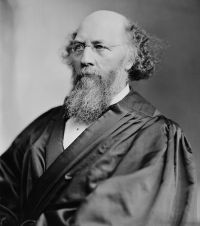
Portrait of Stephen Johnson Field Stephen Johnson Field Little v. Hackett — Opinion of the Court

It is obvious, in a suit against the proprietor of the car in which he was the passenger, there could be no recovery if the driver or conductor of such car is to be regarded as the aervant of the passenger. And so, on the same ground, each passenger would be liable to every person injured by the carelessness of such driver or conductor, because, if the negligence of such agent is to be attributed to the passenger for one purpose, it would be entirely arbitrary to say that he is not to be affected by it for other purposes.
Source: Wikisource

Portrait of Stephen Johnson Field Stephen Johnson Field Little v. Hackett — Opinion of the Court

There is no distinction in principle whether the passengers be on a public conveyance, like a railroad train or an omnibus, or be on a hack hired from a public stand, in the street, for a drive. Those on a hack do not become responsible for the negligence of the driver if they exercise no control over him further than to indicate the route they wish to travel or the places to which they wish to go.
Source: Wikisource

Portrait of Stephen Johnson Field Stephen Johnson Field Little v. Hackett — Opinion of the Court

To determine, therefore, the correctness of the instruction of the court be low-to the effect that if the plaintiff did not exercise control over the conduct of the driver at the time of the accident, he is not responsible for the driver's negligence, nor precluded thereby from recovering in the action-we have only to consider whether the relation of master and servant existed between them.
Source: Wikisource

Get perspective with Kwize: daily news enlightened by great literature