Summary

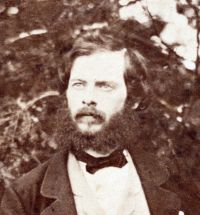
Portrait of Theodore Winthrop Theodore Winthrop,  Edwin Brothertoft — Part I, Chapter IX

“ Edwin Brothertoft had not become an absolute stranger to his old home, for two reasons. He pitied his guilty wife. He loved his innocent daughter. He could not quite give up the hope that his wife might need his pardon, by and by, when sin soured to her taste. He must never totally abandon his child to the debasing influences about her, though he had no power or influence to rescue her now, — that disheartened and broken-down man, contemned by the world as a purposeless idler. ”
Source: Wikisource

Portrait of Theodore Winthrop Theodore Winthrop,  Edwin Brothertoft — Part I, Chapter IX

“ Had she cherished some vague purpose of repentance, some thought of tears, some hope of pardon?
Had her torture of her husband been only a penance for herself? Was it the hate which is so akin to love? Could this be a self-hatred for a self that has wasted the power of loving, — a hate that is forever wreaking vengeance for this sad loss upon the object the heart most longs to love, — the only one that can remind that heart of its impotency? Had she been acting unconsciously by the laws of such a passion?
And this exasperating influence banished, would she have peace at last?
”
Source: Wikisource

Portrait of Theodore Winthrop Theodore Winthrop,  Edwin Brothertoft — Part I, Chapter IX

“ Remember how easily a lesser faith is slain, when the first great faith has perished. The person trusted with the whole heart proves a Lie; then for a time all persons seem liars; then for a time the deceived, if they are selfish, go cynical; if they are generous, they give their faith to great causes, to great ideas, and to impersonal multitudes. Household treachery keeps the great army of Reform recruited.
“This girl,” thought Edwin Brothertoft, “cannot be so blind as not to know why her mother and I are separated.
”
Source: Wikisource

Get perspective with Kwize: daily news enlightened by great literature