Summary

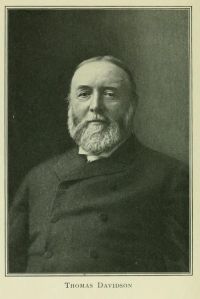
Portrait of Thomas Davidson Thomas Davidson Chambers's Twentieth Century Dictionary 1908… (1908)

Cyclom′eter, an instrument for measuring circular arcs: an apparatus attached to the wheel of a cycle for registering the distance traversed; Cy′clorn, a cycle-horn. [Gr. kyklos, a circle.]
Cyclone, sī′klōn, n. a circular or rotatory storm.—adj. Cyclon′ic. [Coined from Gr. kyklōn, pr.p. of kykloein, to whirl round—kyklos.]
Cyclopædia, Cyclopedia, sī-klō-pē′di-a, n. the circle or compass of human knowledge: a work containing information on every department, or on a particular department, of knowledge, usually arranged alphabetically.—adjs.
Source: Wikisource

Portrait of Thomas Davidson Thomas Davidson Chambers's Twentieth Century Dictionary 1908… (1908)

Cyclostyle, sī′klo-stīl, n. an apparatus for multiplying copies of a writing. [Formed from Gr. kyklos, circle, and Style.]
Cyder. Same as Cider.
Cygnet, sig′net, n. a young swan. [Acc. to Diez, a dim. of Fr. cygne, whose old form cisne (Sp. cisne, a swan) is from Low L. cecinus, not conn. with L. cygnus, Gr. kyknos, a swan.]
Cylinder, sil′in-dėr, n. a solid circular or roller-like body, whose ends are equal parallel circles: (mech.) applied to many cylindrical parts of machines, as any rotating cylindrical portion of a printing-press.—adjs.
Source: Wikisource

Portrait of Thomas Davidson Thomas Davidson Chambers's Twentieth Century Dictionary 1908… (1908)

Cyclopæ′dic, Cyclope′dic. [Gr. kyklos, a circle, and paideia, learning.]
Cyclops, sī′klops, n. one of a fabled race of giants who lived chiefly in Sicily, with one eye in the middle of the forehead: a genus of minute freshwater copepods with an eye in front:—pl. Cyclō′pes.—adjs. Cyclopē′an, Cyclop′ic, relating to or like the Cyclops: giant-like: vast: pertaining to a prehistoric style of masonry with immense stones of irregular form. [Gr. kyklōps—kyklos, a circle, and ōps, an eye.]
Source: Wikisource

Get perspective with Kwize: daily news enlightened by great literature