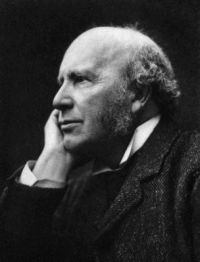
Thomas Hodgkin

Thomas Hodgkin

Summary

Portrait of Thomas Hodgkin Thomas Hodgkin 1911 Encyclopedia Britannica (1911)

Most fortunately for Europe, the Teutonic races already settled in Gaul rallied to the defence of the empire against invaders infinitely more barbarous than themselves. Prominent in this new coalition was Theodoric, king of the Visigoths, whose capital city was Toulouse. His firm fighting alliance with the Roman general Aëtius, with whom he had had many a conflict in previous years, was one of the best auguries for the new Europe that was to arise out of the ruins of the Roman empire. Meanwhile Attila had reached the Loire and was besieging the strong city of Orléans.
Source: Wikisource

Portrait of Thomas Hodgkin Thomas Hodgkin 1911 Encyclopedia Britannica (1911)

Upon Milan and the cities of western Lombardy the hand of Attila seems to have weighed more lightly, plundering rather than utterly destroying; and at last when Pope Leo I., at the head of a deputation of Roman senators, appeared in his camp on the banks of the Mincio, entreating him not to pursue his victorious career to the gates of Rome, he yielded to their entreaties and consented to cross the Alps, with a menace, however, of future return, should the wrongs of Honoria remain unredressed.
Source: Wikisource

Portrait of Thomas Hodgkin Thomas Hodgkin 1911 Encyclopedia Britannica (1911)

The battle which followed—certainly one of the decisive battles of the world—has been well described by the Gothic historian Jordanes as “ruthless, manifold, immense, obstinate.” It lasted for the whole day, and the number of the slain is variously stated at 175,000 and 300,000. All such estimates are, of course, untrustworthy, but there is no doubt that the carnage was terrible.
Source: Wikisource

Get perspective with Kwize: daily news enlightened by great literature