Summary

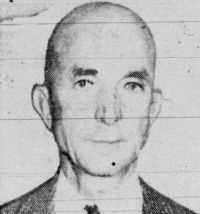
Portrait of W. C. Tuttle W. C. Tuttle Spawn of the Desert — Chapter 1 (1924)

Still, what should I care, Duke?”
“Damn little difference it makes, after a man’s dead,” nodded Duke Steele.
“True as Gospel, Duke. Life is the only thing that interests me; death I know nothing about—nor care.”
And the Saint spoke truly, when he said he did not care; for the Saint was a fatalist, a gambler, who staked his life against other men’s gold. Just as surely as Kidd and Morgan were pirates of the seas, the Saint was a pirate of the Desert, whose appearance belied his calling. Men seemed to speak softly in his presence, as though awed by the majesty of his face and great white beard.
Source: Wikisource

Portrait of W. C. Tuttle W. C. Tuttle Spawn of the Desert — Chapter 1 (1924)

Calico-clad wives of miners, children, dogs, and even a group of burros poked onto the flat to add their faces to the mournful proceedings.
Up the desert trail came two men and a lightly-packed burro; all of them gray with the dust and heat. The one who led the caravan was a mighty, weatherbeaten man, with a long, white beard. In appearance he might have been a saint. Surely he could not be a sinner, with the eyes of a dreamer, the nose of a prophet and the beard of a saint; but nature does queer things to disappoint students of physiognomy.
Source: Wikisource

Portrait of W. C. Tuttle W. C. Tuttle Spawn of the Desert — Chapter 1 (1924)

On all sides the desert stretches away to the haze of nothingness—a land of the mirage; scenes which the jealous desert steals from arid lands and holds up to the eyes of desert men to lure them on. Cities, rivers, lakes, with cool, nodding palms, rippling brooks, which seem only a few feet away, then fade out to show a waste of dust-gray mesquite, which rattles in the hot winds, Joshua-trees, with their agonized arms—and sand.
Source: Wikisource

Get perspective with Kwize: daily news enlightened by great literature