Summary

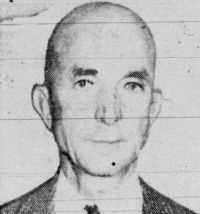
Portrait of W. C. Tuttle W. C. Tuttle The Buckaroo of Blue Wells — I. Bookkeepers (1926)

James turned from his contemplation of the foggy street, and his blue eyes studied the occupants of the big office. There was Henry Marsh, humped like an old buzzard, his long nose close to the ledger page, as he had been the first time James had seen him. He had grown old with Mellon & Co.—so old that he worried about his job.
There were younger men, working adding machines, delving in accounts; preparing themselves for a life of drudgery. Over in the cashier’s cage was David Conley, frozen-faced, pathetic; as old as Mellon & Co. James shuddered slightly.
Source: Wikisource

Portrait of W. C. Tuttle W. C. Tuttle The Buckaroo of Blue Wells — I. Bookkeepers (1926)

James held out his hand and they shook seriously.
Dog,” said James seriously, “you did what I’ve often thought I’d like to do—bite a policeman. I swore out loud in Mellon and Company’s office, and you bit a cop. We’re a disgraceful pair. I’m wondering if you’re a cattle dog—” James sighed heavily—“Well, anyway, you’re as much of a cattle dog as I am a cowpuncher. Sit down and make yourself at home.”
Source: Wikisource

Portrait of W. C. Tuttle W. C. Tuttle The Buckaroo of Blue Wells — I. Bookkeepers (1926)

James Eaton Legg mildly suggested at one of the caucuses that the firm supply each bookkeeper with a fountain pen, in order to economize on lost motions—and nearly lost his job. Not because of trying to increase the efficiency of the bookkeeping department, but because fountain pens cost money.
All the firm mail came to Blair Mellon’s office, and it was his delight to distribute it. Just now he had several letters which he was passing out. He walked past James, stopped. James was looking at the street again.
Source: Wikisource

Get perspective with Kwize: daily news enlightened by great literature