Summary

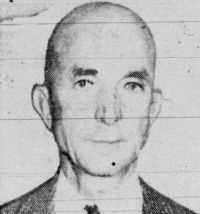
Portrait of W. C. Tuttle W. C. Tuttle The Buckaroo of Blue Wells — V. Paul the Apostle (1926)

The burro lifted his one good ear, thrust out his whiskered muzzle and sniffed like a pointer dog. Then he brayed raucously, shook himself violently and came slowly up to the trough.
The horse drew aside, being either through drinking or too proud to drink with such an object. The burro looked at the horse, decided not to be particular, and proceeded to drink deeply.
Marion leaned against the curbing and laughed at the burro. That was the one reason the ancient was tolerated around the ranch—to make them laugh. His goat-like appetite was a constant provoker of profanity.
Source: Wikisource

Portrait of W. C. Tuttle W. C. Tuttle The Buckaroo of Blue Wells — V. Paul the Apostle (1926)

And there ain’t a milk drinker in the crowd; so they really wouldn’t suffer if yuh took ’em away from the cows.”
“Oh, they ain’t so —— tough,” retorted Porter. “They’re not runnin’ this country. They’ve kinda had their own way in Blue Wells for a long time, but now is the time to call a halt. We’re civilized, I’ll tell yuh that.”
“Who do yuh mean, Porter?”
“Well, all of us—ain’t we?”
“I dunno. Sometimes I wonder if we are. We ain’t savages. We don’t worship no idols, nor we don’t eat each other. Holdin’ up a train is a sign of civilization. I dunno about lockin’ a sheriff in his cell.
Source: Wikisource

Portrait of W. C. Tuttle W. C. Tuttle The Buckaroo of Blue Wells — V. Paul the Apostle (1926)

As Marion turned away from the well and started leading the horse back toward the gate, three horsemen rode up. They were Apostle Paul, Buck and Peeler, who had left the ranch the morning previous to search for Double Bar 8 cattle, which had been reported thirty miles away on the Yellow Horn mesa.
Marion continued out of the patio and met them just outside the gate. With them was a strange dog, which came up to her, acting very friendly.
Source: Wikisource

Get perspective with Kwize: daily news enlightened by great literature