Summary

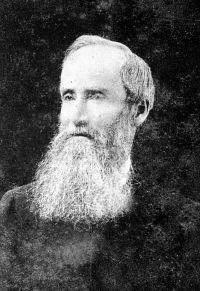
Portrait of Wentworth Webster Wentworth Webster 1911 Encyclopædia Britannica, Volume 3… (1911)

Enough is raised, however, besides the amount handed over to the government, to enable the schools, roads, harbours and public works of every kind to be maintained at a standard which compares very favourably with other parts of Spain. When the three provinces sent in their first contingent of conscripts in 1877, it was found that all but about sixty knew how to read and write, and succeeding contingents have kept up this high standard.
Source: Wikisource

Portrait of Wentworth Webster Wentworth Webster 1911 Encyclopædia Britannica, Volume 3… (1911)

In agriculture the Basque Provinces and the Pays Basque were great cider countries, but during the 19th century this was gradually replaced by wine-growing. The chief industries of the Basque Provinces are the sea fisheries and iron mining. Some of the mines round Bilbao have been worked from prehistoric times. In 1905 the Basque Provinces produced 5,302,344 tons of iron, over five millions of which came from Biscay, out of a total of 9,395,314 tons for the whole of Spain.
Source: Wikisource

Portrait of Wentworth Webster Wentworth Webster 1911 Encyclopædia Britannica, Volume 3… (1911)

Leaving aside the legendary and uncertain portion of their history, we find the Provinces in some districts dependent allies of Navarre, in others of Castile. In Biscay the counts of Haro were lords of Biscay from 1093 to 1350. There was a short union with Castile under Pedro the Cruel, but the definitive union did not take place till 1370. In Álava the ruling power was the confederation of Arriaga (so called after its meeting place) , which united the province to the crown of Castile in 1332.
Source: Wikisource

Get perspective with Kwize: daily news enlightened by great literature