Summary

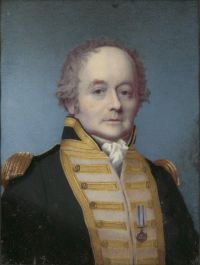
Portrait of William Bligh William Bligh A Voyage to the South Sea — Chapter 13 (1792)

The utmost however that any commander could have supposed to have happened is that some of the people would have been tempted to desert. But, if it should be asserted that a commander is to guard against an act of mutiny and piracy in his own ship more than by the common rules of service, it is as much as to say that he must sleep locked up and when awake be girded with pistols.
Source: Wikisource

Portrait of William Bligh William Bligh A Voyage to the South Sea — Chapter 13 (1792)

The mutineers having forced those of the seamen whom they meant to get rid of into the boat, Christian directed a dram to be served to each of his own crew. I then unhappily saw that nothing could be done to effect the recovery of the ship: there was no one to assist me, and every endeavour on my part was answered with threats of death. The officers were next called upon deck and forced over the side into the boat, while I was kept apart from everyone, abaft the mizenmast; Christian, armed with a buoyant, holding me by the bandage that secured my hands.
Source: Wikisource

Portrait of William Bligh William Bligh A Voyage to the South Sea — Chapter 13 (1792)

Desertions have happened more or less from most of the ships that have been at the Society Islands; but it has always been in the commanders power to make the chiefs return their people: the knowledge therefore that it was unsafe to desert perhaps first led mine to consider with what ease so small a ship might be surprised, and that so favourable an opportunity would never offer to them again. The secrecy of this mutiny is beyond all conception. Thirteen of the party who were with me had always lived forward among the seamen
Source: Wikisource

Get perspective with Kwize: daily news enlightened by great literature