Summary

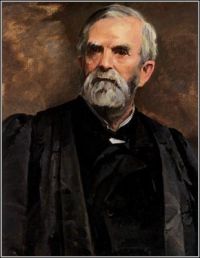
Portrait of William Burnham Woods William Burnham Woods Gibbs Sterrett Manufacturer's Company v…

Even if it was the purpose of the defendant to bind himself by a delivery of the contract to Matteson, such delivery, being to an unauthorized person, would not bind the plaintiff; and if the plaintiff was not bound, neither was the defendant.
The defense, therefore, resolves itself into this: that the defendant, without the concurrence or knowledge of the plaintiff, signed on Sunday a paper writing which bore date of a week-day, and which, to become a contract between the parties, required the assent and signature of the plaintiff, which was given on a week-day.
Source: Wikisource

Portrait of William Burnham Woods William Burnham Woods Gibbs Sterrett Manufacturer's Company v…

Hoag & Conklin were to canvass the state of Wisconsin for the purpose of selecting good and responsible men to become agents, and were to fill out in duplicate the plaintiff's printed form of contract, and cause the same to be signed by the agents selected, and by their sureties, and immediately thereafter to forward such duplicates to the plaintiff at its western branch at Chicago for its approval and signature. Hoag & Conklin had no power or authority to sign or close any such contract on behalf of the plaintiff.
Source: Wikisource

Portrait of William Burnham Woods William Burnham Woods Gibbs Sterrett Manufacturer's Company v…

The law of Wisconsin referred to in the certificate of division of opinion is as follows: 'Any person who shall keep open his shop, warehouse, or workhouse, or shall do any manner of labor, business, or work, except only works of necessity or charity, or be present at any dancing or public diversion, show or entertainment, or take part in any sport, game, or play on the first day of the week, shall be punished by fine not exceeding ten dollars
Source: Wikisource

Get perspective with Kwize: daily news enlightened by great literature