Summary

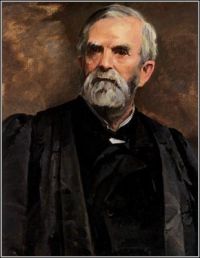
Portrait of William Burnham Woods William Burnham Woods Libby v. Hopkins — Opinion of the Court

What is a debt on one side is a credit on the other, so that the term 'credits' can have no broader meaning than the term 'debts.' We find no warrant in the language of the section or its context for extending the term 'credits' so as to include trusts. Generally we know that 'credit' and 'trust' are not synonymous terms. They have distinct and well-settled meanings, and we see no reason why they should be confounded in interpreting the twentieth section of the Bankrupt Act.
To authorize a set-off there must be mutual credits or mutual debts.
Source: Wikisource

Portrait of William Burnham Woods William Burnham Woods Libby v. Hopkins — Opinion of the Court

To so hold would be to permit a trustee to better his condition by a refusal to execute a trust which he had assumed. Winslow v. Bliss (3 Lans. (N. Y.) 220) and Scammon v. Kimball (92 U.S. 362) , cited by the plaintiffs to support their contention, are cases where a bank or banker was allowed to set off the money of a depositor against a debt due from him to the bank. The answer to these authorities is that the relation between a bank and its general depositor is that of debtor and creditor. When he deposits moneys with the bank, it becomes his debtor to the amount of them.
Source: Wikisource

Get perspective with Kwize: daily news enlightened by great literature